
BDFHYK Auto Parts Resource Center
Explore BDFHYK's expert auto parts guides for reliable troubleshooting and exact OEM fitment. Find technical articles on ignition coils, brake rotors, fuel pumps, engine coolant reservoir overflow tanks, and motor mounts to keep your vehicle running smoothly. Have specific topics or questions in mind? Contact us at service@bdfhyk.com!
Check Engine Light or Rough Idle?
Find practical ignition coil and spark plug guides for common vehicles, including Ford F-150, Chevy Cruze, V8 engines, and daily drivers with misfire or coil failure symptoms. Learn what causes rough idle, hard starts, check engine lights, and when it’s time to replace your ignition components.

Not Sure Which Brake Rotor Kit You Need?
Learn how to spot bad or warped brake rotors, compare replacement vs resurfacing, understand rotor replacement cost, and choose the right brake rotor kit for your truck, SUV, or daily driver.

News

Coolant Reservoir Maintenance Guide: Filling, Cleaning, Draining and Common Mistakes
This coolant reservoir maintenance guide explains how to check coolant level, use the correct coolant type, avoid overfilling, inspect for cracks or leaks, and keep the reservoir readable. It also...
Read More
What Happens If You Overfill the Coolant Reservoir? Signs, Risks and Fixes
This guide explains what happens if you overfill the coolant reservoir, why overfill occurs, common signs such as overflow, residue, coolant smell, or level above the MAX line, and how...
Read More
What Is a Shock Absorber? A Practical Guide for Everyday Drivers
Shock absorbers help control spring and wheel movement so a vehicle does not keep bouncing after road impacts. They improve ride control, tire contact, braking stability, and handling. Drivers should...
Read More
Before You Buy a Coolant Reservoir Replacement: Fitment, OE Number, Cap, Sensor and Hose Checks
This guide explains what to check before buying a coolant reservoir replacement, including vehicle fitment, OE or interchange number, tank shape, mounting points, hose ports, cap type, and sensor provisions....
Read More
How to Replace a Coolant Reservoir: Removal, Installation and Safety Checklist
This guide explains how to replace a coolant reservoir safely, including preparation, fitment checks, removal, installation, coolant refilling, bleeding, and leak inspection. It also covers how to choose the correct...
Read More
Can You Drive With a Leaking, Cracked or Empty Coolant Reservoir?
A coolant reservoir leak can come from the tank body, molded seam, cap, hose nipple, clamp, sensor port, or nearby cooling system components. The main signs include low coolant level,...
Read More
Why Is My Coolant Reservoir Bubbling, Boiling or Overflowing?
An empty coolant reservoir usually means coolant is leaking somewhere in the cooling system, such as the reservoir, hose, cap, radiator, water pump, thermostat housing, or heater hose. It can...
Read More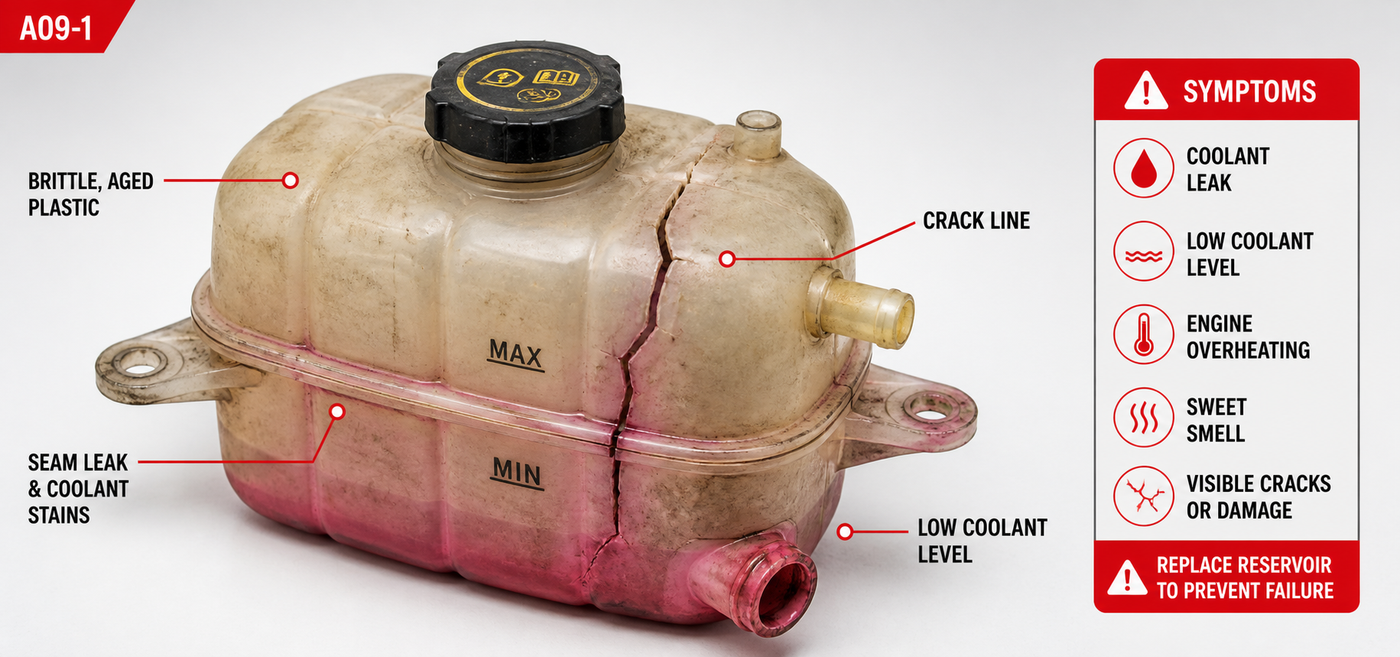
Cracked Coolant Reservoir: Why It Happens and When to Replace It
An automotive plastic coolant reservoir typically cracks due to the severe environmental stress of continuous engine bay heat cycles, system pressure spikes, and mechanical vibration, which collectively accelerate polymer embrittlement...
Read More
Coolant Reservoir Leak: How to Check the Tank, Cap, Hose and Connections
A coolant reservoir leak can compromise an entire automotive cooling system, manifesting as visible wetness on the tank body, persistent low fluid levels, a sweet chemical odor, or fluid puddles...
Read More